Breast Surgery
Beautifully Individual.
Breast surgery shaped around your anatomy, your goals and your individual needs. Led by Dr. Mehrad Jaberi, board-certified plastic, reconstructive and aesthetic surgeon in Ottawa.

Introducing PEXY
All about breasts.
All about you.
An entire practice dedicated to breast aesthetics. PEXY focuses on individualized breast surgery: augmentation, reduction, lifting, reshaping and revision, and just as importantly, on the conversation that comes first.
We start with your anatomy, your goals, the options that exist, their limits, and what recovery really looks like. Then you decide. That might be surgery. It might be a different procedure than the one you came in asking about. It might be no surgery at all, and that is a perfectly good outcome too.
- 01AddImplants, fat transfer, or your own tissue
- 02LiftReposition and reshape
- 03ReduceLighter, more comfortable, in proportion
- 04RevisitRemoval, exchange, revision, symmetry
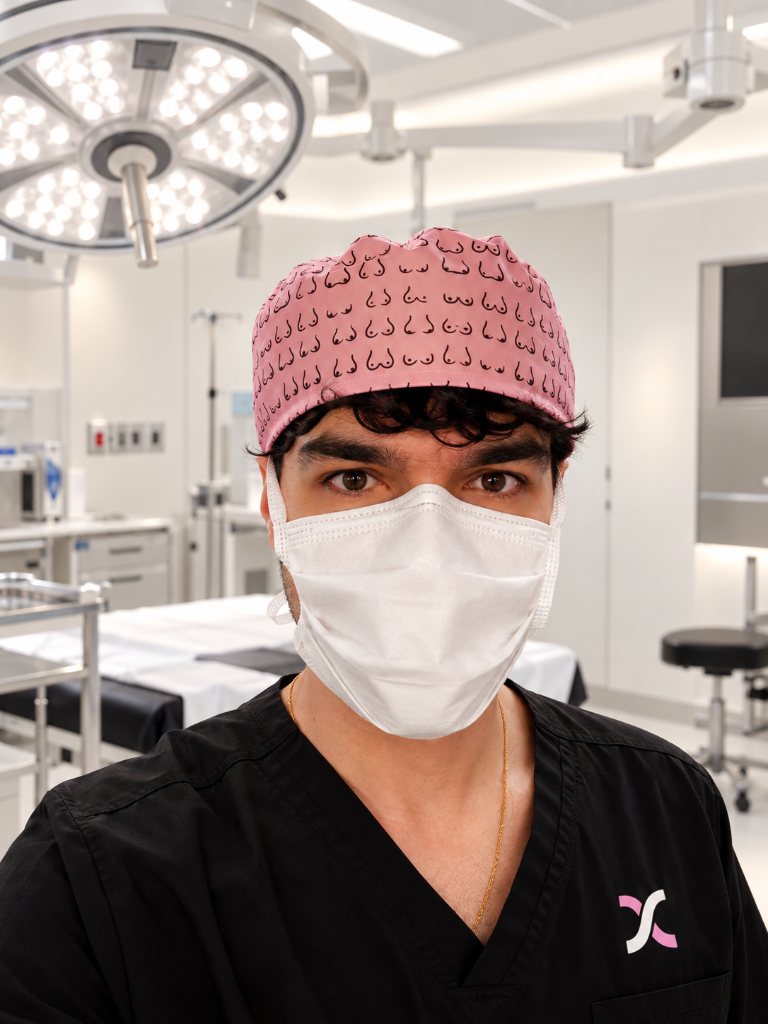
Meet the surgeon
Dr. Mehrad
Jaberi
MD, MSc, FRCSC · Plastic, Reconstructive & Aesthetic Surgeon
Dr. Jaberi is a Royal College of Physicians and Surgeons of Canada board-certified plastic surgeon practising in Ottawa. His approach pairs aesthetic judgment with surgical safety: careful assessment, individualized plans and honest conversation about options, limits and risks.
Expect directness, plain language and time to ask every question.
Procedures
Explore your options.
The PEXY philosophy
There is no one-size-fits-all breast.
Surgical planning considers your anatomy, lifestyle, aesthetic priorities, medical history and preferences. No shape or size is medically better than another. The goal is an informed choice and a thoughtful plan.
Individuality 01
There is no single ideal breast shape or size.
Expertise 02
Surgical decisions should reflect training, anatomy and clinical judgment.
Honesty 03
Realistic expectations, transparent discussion and informed consent matter.

In the operating room
Planned with you. Performed by me.
Every operation starts with measurements, markings and a plan you have approved. Photographed with the patient's written consent.
Before & after
Real results, with consent.
The PEXY gallery shows only authentic patient photographs, published with documented permission, in consistent framing, with a clear note that individual results vary.
Cases are being prepared for publication. Until then, we do not show stand-in or generated images that could be mistaken for real results.
The patient journey
From the first conversation to follow-up.
- 01
Consultation
Your goals, your examination, your options, honestly discussed.
- 02
Personalized surgical planning
Technique, incision placement, anesthesia and a written quote.
- 03
Preparation
Individualized instructions and any required assessments.
- 04
Surgery
A planned day with your surgical team, in an accredited facility.
- 05
Recovery & follow-up
Healing, restrictions, check-ups and support, with clear guidance on when to call.
It depends on what you would like to change, whether that is size, shape, position, symmetry, or the look of the nipple and areola. Some people want more volume, others want a lift, a reduction, or a revision of earlier surgery. A consultation lets Dr. Jaberi examine your anatomy and talk through the options, including the option of not having surgery. No procedure is right for everyone, and results cannot be guaranteed.
Breast augmentation adds volume, most often with implants, or sometimes with fat transfer. A breast lift repositions the breast and nipple and removes excess skin, but it does not reliably add size. Which one suits you depends on whether your main goal is fullness, position, or both. Your surgeon can assess this during an examination.
Yes, in many cases the two are combined in one operation, which is called augmentation with lift. It may be suggested when someone wants more volume and also has breasts that sit lower. Combining them involves more incisions and a longer procedure, and in some situations a staged approach may be advised. Whether combining is suitable for you is decided after an examination.
Most people feel sore and tired for the first several days, with swelling and bruising that gradually settle over weeks. Many return to light or desk work within about one to two weeks, while strenuous exercise and heavy lifting are usually restricted longer. Recovery varies by procedure and by person, and you will receive written instructions specific to your surgery. Final shape can take several months to appear.
Every breast operation leaves scars, and their location depends on the procedure. Augmentation usually involves a short scar, while lifts and reductions need longer incisions around the areola and sometimes down to or along the breast fold. Scars are permanent, usually fade over a year or more, and vary from person to person. Their appearance cannot be promised, and your surgeon will show you where they would be placed.
All surgery carries risks, including bleeding, infection, poor wound healing, changes in sensation, asymmetry, and unfavourable scarring. Implant surgery adds specific risks such as capsular contracture, implant rupture or malposition, and the possible need for further surgery. Anesthesia has its own risks. Your surgeon will review how these apply to you before you decide.
Many people can, but it cannot be guaranteed. Augmentation, lift, and reduction can each affect milk ducts or nipple sensation to different degrees, and breast reduction in particular may reduce the ability to breastfeed. If you may want to breastfeed in the future, tell your surgeon so it can be factored into planning.
Breast implants are not lifetime devices. Many last years or even decades, but there is no fixed expiry, and some people need exchange, removal, or revision sooner because of complications or changing preferences. Regular follow-up, and imaging if your surgeon advises it, are part of long-term care. It is wise to plan on the possibility of future surgery.
Often, yes. Revision can address concerns such as implant position, capsular contracture, size changes, asymmetry, or scars, or it can involve implant exchange or removal. Revision surgery can be more complex than a first operation, and the result is less predictable. An examination and a review of your surgical history are the first steps.
You can book online through the booking page or call the practice. A booking is not confirmed until the booking system records it, so please wait for that confirmation. Please do not share your medical history through ordinary website forms; discuss it at your consultation or through the secure channels the practice provides.
Your questions.
Your goals.
Your consultation.
A consultation is a conversation: your goals, your anatomy, your options and the honest trade-offs. Booking one is not booking surgery.